What Is Spotting? Understanding the Differences Between Spotting and Menstruation
on April 09, 2026

What Is Spotting? Understanding the Differences Between Spotting and Menstruation

Introduction

Have you ever noticed a small amount of bleeding outside your regular period and wondered what it means? This light vaginal bleeding, commonly called spotting, is usually harmless and short-lived. That said, spotting can sometimes signal an underlying hormonal shift or health change that's worth paying attention to.

Knowing the difference between spotting and a menstrual period is important for understanding your reproductive health and staying connected to your body's signals. Whether it's linked to ovulation, early pregnancy, or stress, recognising what your body is communicating helps you make informed decisions about your health.

In this article, you'll find out what spotting is, how it compares to menstruation, what commonly causes it, and when it's worth investigating further.

What is spotting?

Spotting refers to light, usually brownish or reddish bleeding that occurs between periods, outside of your regular menstruation. It is generally harmless and tends to resolve within a day or two.

Spotting may occur:

  • Just before or after your period
  • Around ovulation
  • In early pregnancy
  • As a response to hormonal changes
  • Under stress or while using certain medications

Spotting is lighter in both flow and colour than a period, and typically only requires a panty liner. Noting the timing, frequency, and appearance of any spotting can help you determine whether it's a normal part of your cycle or something to monitor more closely.

Spotting vs. Menstrual Period

What distinguishes spotting from menstruation?

Not all vaginal bleeding is menstruation. Spotting can look similar to period blood in timing, colour, and texture, which is why it's often confusing. Here's a breakdown of the key differences:


Timing: When does the bleeding occur?

Menstruation: Follows a regular cycle, approximately every 24 to 38 days.

Spotting: Occurs outside the expected menstrual window, such as:

  • Before or after your period
  • Around ovulation
  • During hormonal changes
  • In early pregnancy
  • Under the influence of stress or medication

Duration: How long does it last?

  • Menstruation: Typically lasts 3 to 7 days with a steady flow.
  • Spotting: Usually brief and irregular, often lasting 1 to 2 days or just a few hours.

Volume: How much blood is lost?

  • Menstruation: Involves 30 to 80 millilitres of blood, sometimes with tissue.
  • Spotting: Minimal discharge, often just a few drops, usually manageable with a panty liner.

Blood colour: What does it look like?

  • Menstruation: Dark red to brownish depending on the day, often with a thicker or clumpy texture.
  • Spotting: Light red, pink, or brownish; often appears diluted or older in colour.

Consistency: What does the bleeding look like?

  • Menstruation: Often thicker, with clots or small tissue remnants.
  • Spotting: Tends to be thin and mucousy, without visible clots.

Accompanying symptoms: Are there other physical signs?

Menstruation is often accompanied by:

  • Abdominal cramping
  • Mood changes
  • Breast tenderness
  • Fatigue

Spotting is usually symptom-free or accompanied by very mild signs. Ovulation spotting may occasionally come with a slight pulling sensation or mild cramp.

Recognising these differences helps you track your cycle more accurately and identify whether any bleeding is part of your natural rhythm or something to keep an eye on.

Common Causes of Spotting

There are several potential causes of spotting, many of which are completely normal. Here are the most common:
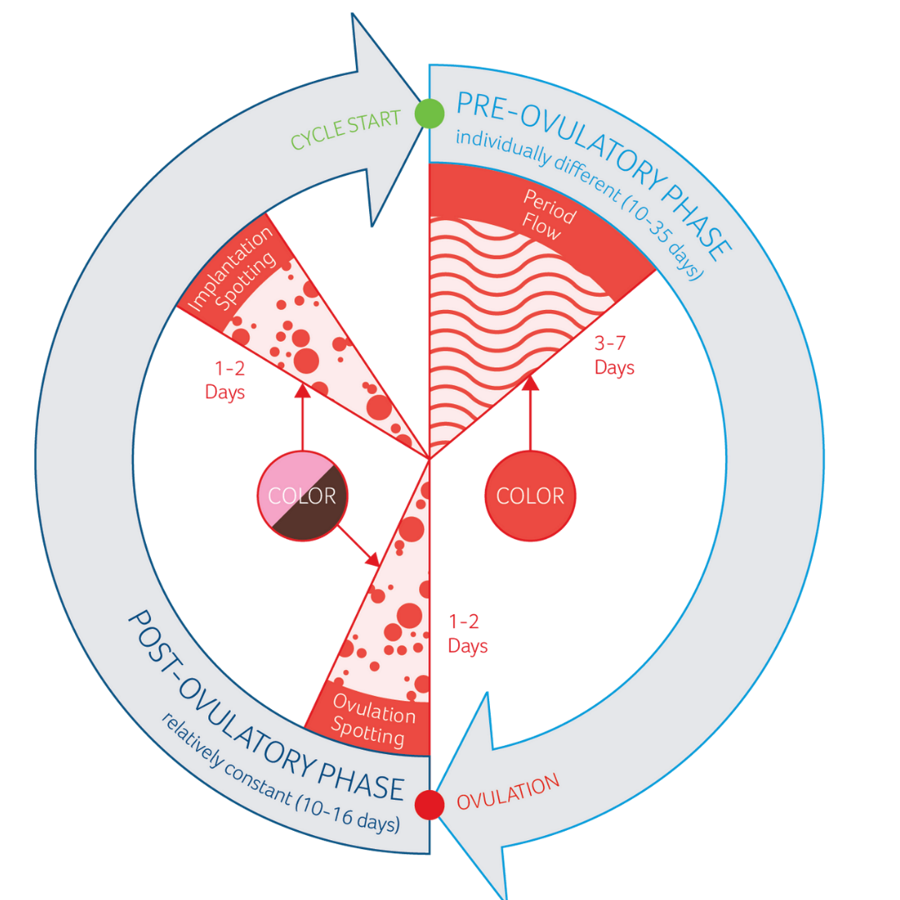
The image shows an infographic of the menstrual cycle with a representation of the preovulatory and postovulatory phases. It illustrates the difference between spotting and menstruation in terms of duration, color, and timing in the cycle.

Ovulation spotting

Ovulation spotting typically occurs around the midpoint of your cycle, usually 10 to 16 days before your next period. As oestrogen levels dip and the follicle releases an egg, some women notice:

  • Pink or brown spotting
  • A short duration of 1 to 2 days
  • Mild cramping or ovulation pain (mittelschmerz)

Ovulation spotting is generally harmless. If it occurs frequently or regularly, it's worth mentioning to your doctor to rule out other causes.

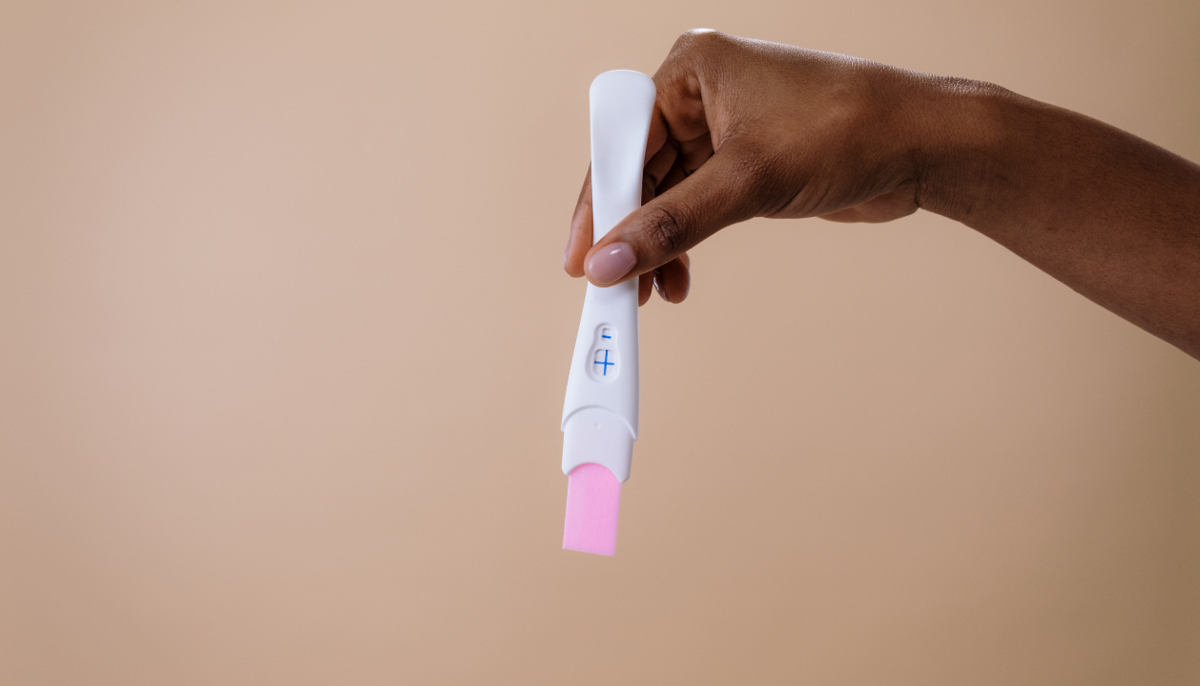
A hand holds a positive pregnancy test with a blue plus sign, symbolizing the question many women ask when their period is late. While pregnancy is one reason, stress, weight changes, illness, or thyroid issues can also cause missed periods.

Implantation bleeding

Implantation bleeding occurs roughly 4 to 6 days after ovulation. When a fertilised egg embeds into the uterine lining, it can rupture tiny blood vessels, causing:

  • Light red or pink spotting
  • No increase in flow over time
  • Mild or no cramping
  • A slightly elevated body temperature

It can be one of the earliest signs of pregnancy, though not every woman experiences it.

Spotting before your period

Premenstrual spotting can occur as progesterone levels decline before menstruation begins. This may point to:

  • A luteal phase defect
  • Hormonal imbalance

While usually harmless, frequent premenstrual spotting is worth discussing with your healthcare provider.

Hormonal fluctuations

Hormones play a central role in menstrual health. Spotting may result from:

  • Stress
  • Sleep deprivation
  • Intense exercise
  • Starting or changing hormonal contraception

Spotting is particularly common when the body is adjusting to a new contraceptive method.

Breakthrough bleeding in puberty

During puberty, the body is still regulating its hormone levels, and ovulation may not occur every cycle. This can lead to breakthrough bleeding that presents as light, irregular spotting.

Spotting during perimenopause

As women approach menopause, hormone levels fluctuate more significantly. Irregular spotting, particularly before periods, becomes more common and is usually related to declining oestrogen levels.

comparison table

Menstruation vs Ovulation Spotting vs Implantation Bleeding

The table below outlines the key differences between these three types of bleeding to help you identify what you're experiencing:
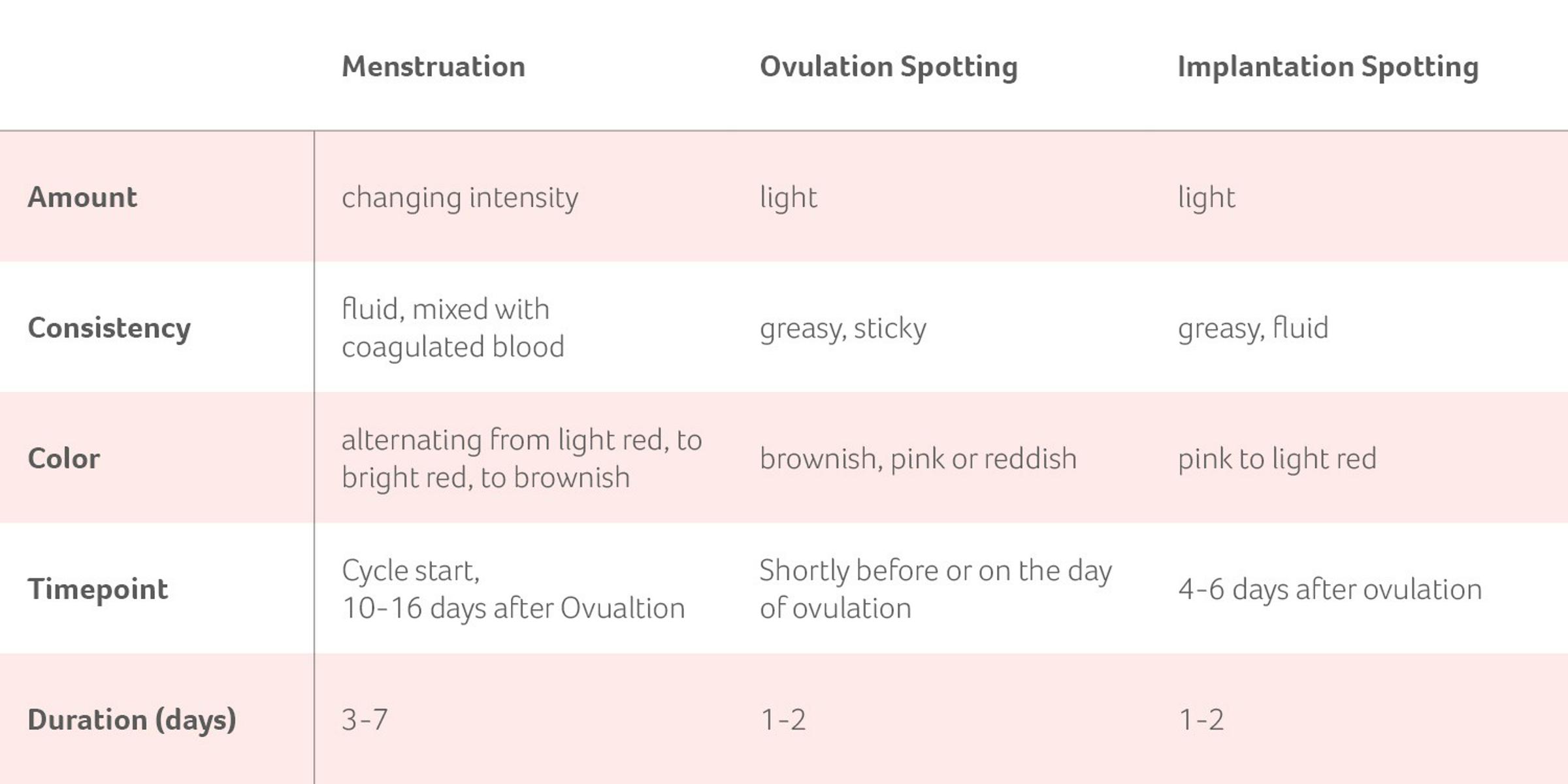
A graph with the most important differences of spotting vs. menstruation. Shows the difference of an implantation bleeding, ovulation bleeding and menstruation.

Use this table as a reference when trying to identify the nature of your bleeding. By noting characteristics such as timing, flow, colour, and associated symptoms, you'll be better placed to understand what your body is telling you.

Track Your Cycle

Tracking your menstrual cycle is one of the most effective ways to understand your reproductive health. Whether you're trying to conceive or simply want to know your body better, cycle tracking provides valuable insight into hormonal patterns, ovulation timing, and the causes of irregular spotting.

Woman sitting in bed smiling and showing the Lady Comp cycle computer. The device analyzes basal body temperature to determine fertile and infertile days for natural family planning.

Benefits of Cycle Tracking:

  • Identifies patterns: Helps you notice changes in the timing, duration, or symptoms of your cycle.
  • Shows your fertile window: Essential for family planning, whether you're trying to conceive or avoid pregnancy.
  • Highlights irregularities: Spotting that doesn't follow a recognisable pattern may indicate an underlying issue.
  • Supports body literacy: Detailed cycle records can help you and your healthcare provider make more accurate assessments.

Digital fertility trackers and cycle computers make it easier to detect trends over time, helping you identify whether spotting is connected to ovulation, implantation, or something that warrants further investigation.

When to See a Healthcare Provider

  • Spotting after menopause: Any bleeding after menopause should be assessed by a doctor.
  • Spotting after intercourse: Particularly if it's persistent, as it may be linked to cervical or vaginal irritation or other conditions.
  • Heavy spotting between periods: If you need a pad or tampon, it's no longer considered light spotting.
  • Spotting with pain or cramping: Could indicate endometriosis, fibroids, or infection.
  • Frequent spotting with irregular cycles: May point to PCOS or thyroid dysfunction.
  • Spotting with unusual discharge or odour: Could suggest a vaginal or cervical infection.

If you notice any of these signs, it's important to speak with a gynaecologist, midwife, or GP for a thorough assessment.

Dr. Niels van de Roemer, Daysy Medical Adviser

FAQs

Can spotting be a sign of pregnancy?

Yes. Implantation bleeding can occur a few days after fertilisation and is one of the earliest signs of pregnancy in some women.

Do I need to see a doctor if I have spotting?

Not necessarily. Occasional spotting is usually harmless. However, if it's frequent, heavy, or accompanied by other symptoms, it's worth getting checked.

Can I get pregnant during spotting?

Yes, particularly if the spotting is occurring around ovulation, which means you may be in a fertile phase of your cycle.

Is spotting normal while on birth control?

Yes, especially when starting or switching methods. The body often needs time to adjust to hormonal changes.

Can infections cause spotting?

Yes. STIs, bacterial vaginosis, or yeast infections can cause inflammation that leads to spotting.

How do I tell if it's spotting or a light period?

Consider the timing, flow, and colour. Spotting is typically lighter, earlier or later than expected, and doesn't increase in flow over time the way a period does.

Can I get my period and still be pregnant?

It's uncommon, but some women mistake implantation bleeding for a light period. A pregnancy test is the most reliable way to find out.

A Note from Period Wisdom Boutique

Period Wisdom Boutique exists because we believe women deserve to understand their bodies. Not in a clinical, overwhelming way, but in a way that feels personal, empowering, and genuinely useful in everyday life.

Spotting is a perfect example of why cycle literacy matters. When I track my cycle, I don't have to wonder or worry when I notice a little unexpected bleeding. I can look at where I am in my cycle and know, with confidence, whether it's mid-cycle spotting around ovulation or light premenstrual spotting in the days before my period. That distinction changes everything. It turns a moment of uncertainty into a moment of self-knowledge.

That's what we want for every woman who comes to Period Wisdom Boutique. The tools, knowledge, and confidence to understand your own cycle and trust what it's telling you.

Leave a comment

Please note, comments need to be approved before they are published.